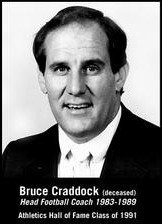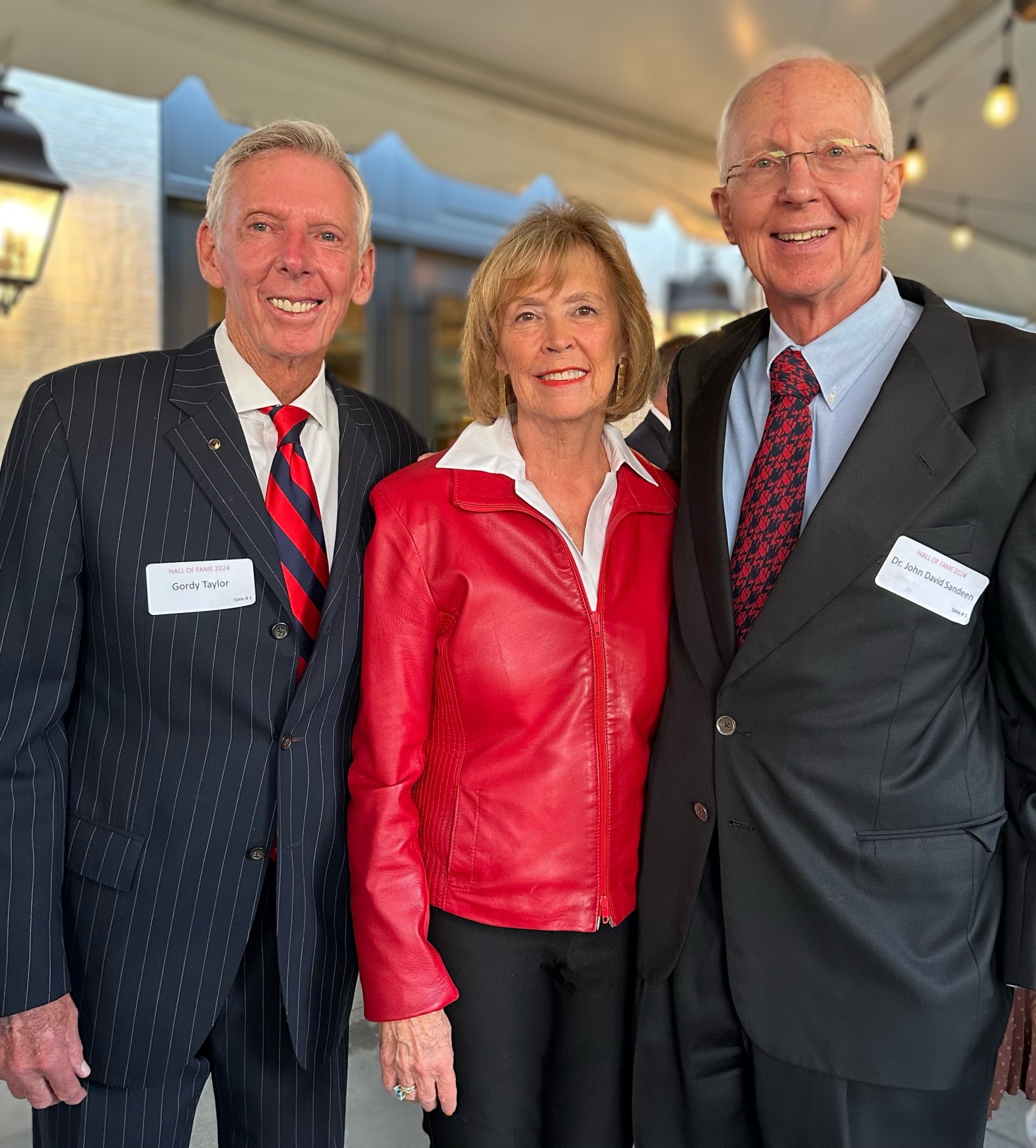


Hinsdale Hall of Fame Dinner 2024. L to R: Gordy, Diane, & John Sandeen. Mike Mason ’64, Gordy, ’64, John Sandeen, ’64 (HOF Inductee 2024), Bill Zillman, ’63. Class of 1964 HOF attendees: Cissy Mohlman Webb, Richard Sherman, Gordy, Craig Baab, Bruce Fogarty, Richard Pavek, John Sandeen, April Holub Long, & Mike Mason.
It had to happen; it did; I’m delighted. I was there to participate. Of our class of 624, 45 of us attended the 60th class reunion of the Class of 1964 at Hinsdale Township High School. We are senior citizens and clearly on the “mature end” of members of the 4th Quarter. Yes, not everyone made it as some not interested, others too far to travel, others with health issues, and sadly, a good number on the other side of the grass. The weekend began with a Hinsdale Central Hall of Fame dinner on Thursday night and Dr. John Sandeen, one of our classmates, was inducted. On Friday it was a tour of what is more like a small college campus than a high school and very impressive in every way. The football game was Friday night and Hinsdale Central defeated Morton 56-0, so we were clearly on a roll. The play-by-play announcer called out the various reunions in attendance at the game. A roar went up for the children of the Class of 14 and a little more subdued for the folks from the Class of 04. Then it was time for 94, then 84, and finally a huge roar for 50-year reunion attendees from the Class of 74. And then it happened. The announcer spoke clearly, as if anyone was still listening–“Anyone here from the Class of 64?” There was a shallow echo from the nine of us who had endeavored to stay up beyond 8 p.m. for a night game. Of course, we all departed at halftime as we had to return to our hotels which required, of all things, driving up Route 83 at night.
The parade was at 9:30 on Saturday morning. It was sort of cute—so many young people running around with all that energy. There was a group of us standing at the intersection of First Street and Washington as what appeared to be a John Hughes movie unfolded with lots of convertibles, cheers from red and white uniformed high schoolers with school spirit everywhere. It felt like we were back in the sixties with two modifications. First, now the school offers 32 different sports, think of it—32! How many did we have? Secondly, it was like the United Nations on parade. Progress in action in suburban Hinsdale.
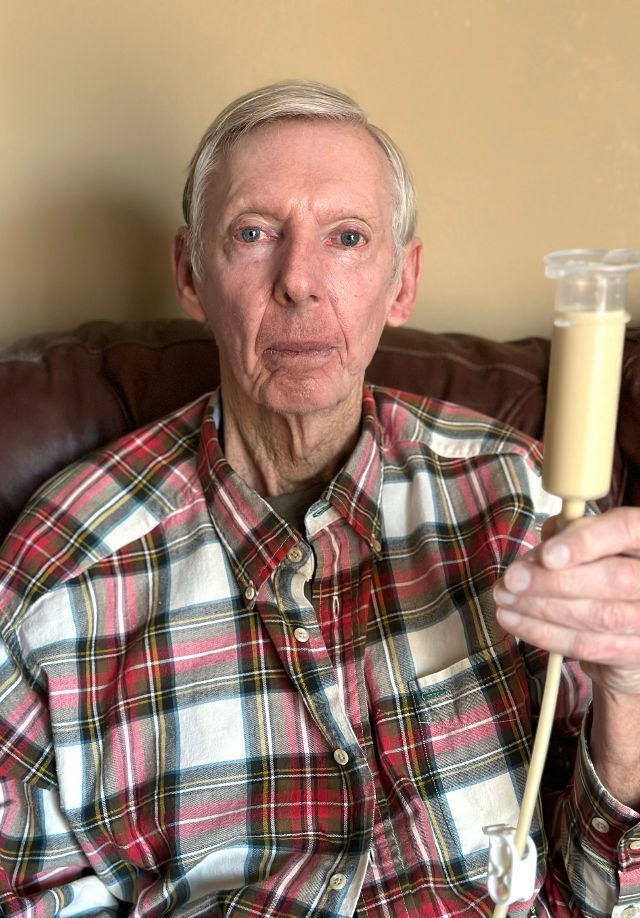
Time for the main event on Saturday night held at a local watering hole in Clarendon Hills. No cover charge and only expense was your own beverages. This now makes for a very cheap night for the Taylors as I remain tethered to PEG the omnipresent feeding tube. Diane and I strolled in around 7 o’clock, and things were already underway. We got our nametags and began to mingle. Diane knows my classmates from past reunions, so we each sort of did our own thing. That’s not exactly true, as Mrs. Taylor became the unofficial photographer, so she was quite busy.
I looked around at the 45 or so brave souls who had ventured out to see “what everyone looked like” after 60 years. Think about it—60 years. I was stunned as the same cliques/groups from decades ago were all represented i.e. brainiacs, class leaders, jocks, simply nice kids (work after school, played minor sports, just middle of the road kids). But none of that mattered, none of it. We were all just a bunch of almost 80-year-olds, who for this one night were kids again, catching up with our classmates. It made no difference if you had been an executive, a doctor, a lawyer, a repairman, a postal worker, a teacher, a homemaker, an electrician, a plumber, or anything else. No one cared what we did “for a living.” Everyone was on the same plain regardless of wrinkles, weight gain, hair loss, or even someone with a PEG. We were all the same. I wondered, “Had we matured or just too much trouble to put everyone into a specific silo?” I opted for the former.
Maybe, just maybe we were following the words of English writer Oscar Wilde who once said, “Be yourself, everyone else is already taken,” and so we did. Stories were told and certainly embellished and photos, lots of photos to share. We heard of deceased spouses, choices good and bad made by our children, and questions about lost classmates. It was funny but ALL our grandchildren and even great-grandchildren are perfect—every single one of them. We found out some of our classmates were gay; no one seemed to care. Again, another sign that maybe as we go deep into the 4th Quarter of our lives, we are maturing as functioning human beings. I didn’t hear one mention of politics, or even the names of Trump or Harris. Clearly, our class has representation on both sides of the aisle, but it just didn’t seem to matter.
There was a word I heard mentioned quite a bit as I moved from group to group—HEALTH. We range from those who seem to be the perfectly healthy to those who appear to be just “hanging on,” but God bless everyone for attending. Our lives were enriched by reconnecting with our past as we prepare to embark on our future. Certainly glad Diane and I made the trip from Macomb. There is talk of #65 in 2029, but I’m not so sure. No one jumped up to coordinate the effort but who knows. For sure, this effort was a success. I’m grateful to Mike Mason, Joe Lascola, Karen Kemmerling Harbour, Roger Treend, Carol Skeels Nambo, Dawn Phillips Post, Deborah Barile, and everyone else who made the effort to bring us together.
The 4th Quarter moves ahead…