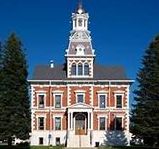
Macomb, Illinois
In the November 19, 2001, issue of Newsweek, author Anna Quindlen wrote, “September 10, 2001 was the last everyday morning of the rest of our lives.” In those 12 words, Quindlen spoke volumes about the world in which we now live. As a member of the 4th quarter congregation, my memory takes me back to the Cuban Missile Crisis of 1962, assassination of President Kennedy in 1963, his brother Bobby and Dr. Martin Luther King in 1968, Vietnam, Watergate, and the Challenger disaster. I thought I had pretty much “seen it all.” The major events of my lifetime were behind me and for the remainder of my days, the focus would be on family and friends, sports on tv, walking around town, and pretty much just keeping busy and staying out of the way of the people doing the heavy lifting necessary to move the agenda of the nation forward.
Then, in late January 2020, Diane asked me if I had seen the story in USA Today about the virus in Wuhan, China and to paraphrase Quindlen, “In an instant our lives would be altered in ways from which there would be no return to what they were before.” Covid-19 has arrived and won’t be going away soon, so what to do about it. I guess we made that decision 50 years ago without even knowing it. We moved to and stayed in Macomb, IL. We are living in small town America where, for us, it seems people care, really care about the welfare of their fellow citizens.
There is a sense of security and genuine intimacy in a small town. As our three kids were growing up, they always marveled that news about their exploits got back to our house before they did. You get close to one another in smaller communities. It’s just the nature of things. People are friendly in Macomb; they care about and care for each other. Small towns develop a sense of community sharing and working together. We rally around one another in times of need. After the terror of 9-11, Western’s Alumni Association hosted a cookout to support victims of the disaster. In a single afternoon we garnered the support of HyVee foods, Coca Cola bottling, the Macomb Park District, and B and S Tent Rentals. Townspeople cooked and served food and soft drinks and over a two-day period $5,000 was raised for the September 11th Fund set up by the United Way. It was a moving experience as people in rural Illinois joined together to help others they’d never met 1,000 miles away.
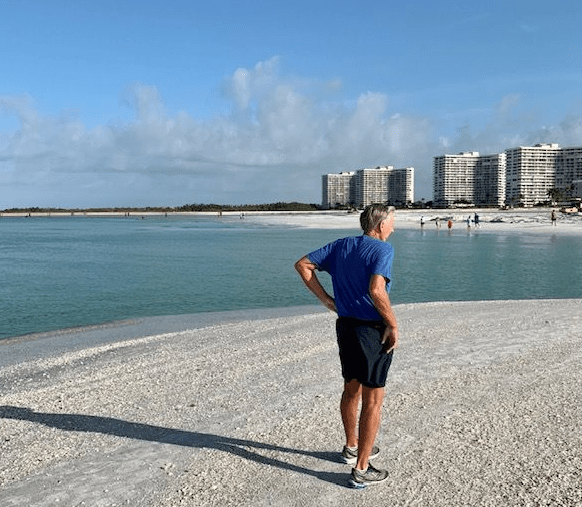
In Macomb, when you call a plumber, an electrician, an auto mechanic, owner of a furniture store, a carpet layer, a barber, or hairdresser, it is often times someone you already know. The same goes for health professionals like doctors and dentists. We actually have sustained relationships with these folks before we call for their assistance. Taking a walk is more than just exercise, it’s a social experience as you wave and say hi to folks you have known for decades or maybe just reaching out to say hello for the first time. OK, I’m in that 4th Quarter, so sometimes when I’m taking a walk, I can feel that car slowly and methodically following me. Who could it be? Whose so damn interested in my walk? Curiosity gets the best of me and I turn around and smiling behind the wheel are Eric Jameson, Pat Burke, or Steve and Mark Tibbetts, all funeral home directors. They joke about my imminent demise and I respond in kind. Things like this happen in small town America because we know each other and share parts of our lives. In spite of their collective concern for my welfare, I do not intend to meet these men professionally in the near future.
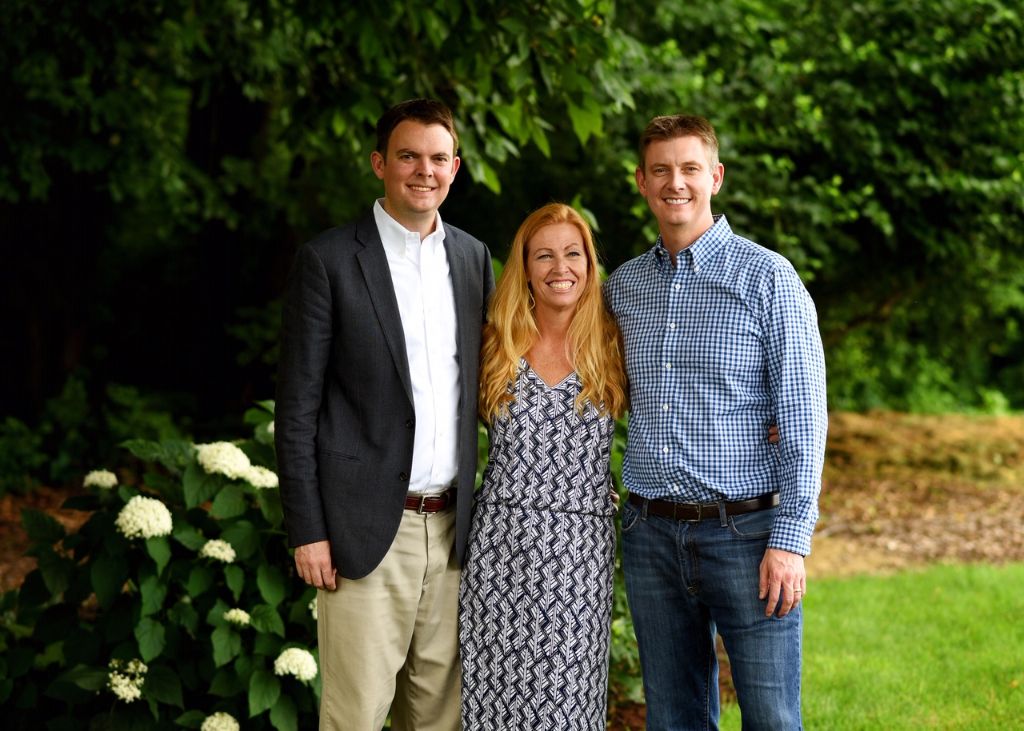
Sitting here typing gives me inspiration, hope, and belief that each of us, in our own way, cares about one another. It’s not that people in big cities don’t care about one another, it’s just easier to act on those concerns when the population base is smaller and more intimate. There is a favorite story of mine that drives this point home in a way that, when I tell it, always brings a tear to my eye and a smile to my face. It’s about a man who reminds me of my dad–high praise in my book. Gordon III is oldest of our two sons and in his junior year of high school proudly announced, “I do not want to, nor do I intend, to go to prom.” However, fate would intervene. At the last minute, on the Saturday morning of the big dance, Gordon’s good friend, Brett Cazalet, who is now Head Football Coach at Dunlap High School, had an emergency appendectomy and was hospitalized. Brett called Gordon and asked if he would escort his date to prom, and as good friends will do, and with some parental coaxing, Gordon said yes. Everything was done–tuxedo rented, flower purchased, tickets in hand, dinner reservations made. One small problem–Gordon is 6’4″ tall and Brett checks in at 5’9″. We called every store in town that rented tuxedos but none were available. We were desperate.
Over the years, I’d bought a couple of suits at Herbert’s Men’s Wear, so we stopped in there with Gordon. Owner, Tom Herbert, one of the most dapper dressers in town, came out and like everyone else, said he just didn’t have any tuxedos in stock so I said thanks for trying and the Taylor boys headed for the door. We were almost gone when Tom called out, “Wait a minute, I have an idea.” Tom was tall and distinguished, and he escorted Gordon into the back room from which Gordon soon emerged wearing Tom’s personal and very expensive tuxedo. Diane and I could hardly believe this extraordinary act of kindness and generosity. A few tucks and a little mending did miracles, but Tom Herbert was the real miracle that day. The shoes, I forgot to mention the shoes. No problem—long-time friend Larry Mortier provided those and the ensemble was complete. Mission accomplished and all because of people who care.
A couple of months ago Brian Dietz, the CEO of McDonough District Hospital called and asked if I would be interested in interviewing some of his top administrators on the local tv show I host called “Macomb on the Move.” Brian wanted to get the word out about how the citizenry could best deal with Covid-19. I said sure, and we did four shows, all airing on local television with three common themes–wear a mask, maintain social distance, and wash your hands. It was accomplished with a couple of elbow shakes and cooperation from the hospital, the Mayor’s office, and our producer, who drove in from Iowa City to tape the shows. Small town–quick, helpful, and efficient.
Another example of small-town caring was my bout with base of tongue cancer in 2010. After 35 radiation and 5 chemo treatments, I eventually was out walking again, and people I didn’t even know stopped their cars to run over and give me a hug and wish me well. They were genuinely glad to see me out and about. Pat Stout, writer for our local newspaper, read in the blog Diane and I were writing about my health ordeal. One entry reported that I was actually able to eat a small piece of a canned peach. Like many others, he cared and felt a need to report to others. Suddenly a headline appeared in his weekly editorial entitled “Gordy Taylor eats a peach.” You really can’t make this stuff up.
In January 2018, while at a Chicago Blackhawks game at the United Center, Diane fell on the stairs and broke both, yes both, her ankles. She was immobile for months because of wearing toe to knee casts and had to live in our family room. Word got out and wouldn’t you know it, 30 of her friends, signed up on an app called Meal Train, delivering dinners to our house night after night. Of course, the meals were hand delivered as all of these women wanted to see and visit with Diane in person. It was incredible and extraordinary. Diane’s spirits were lifted by these acts of collective kindness. Where do things like this happen? I’ll tell you where, in a small town. So, that’s why we’re here and likely to remain here. The people who make up our little universe have let us into their lives and us, them into ours. As we deal with the ravages of the pandemic, there is no place we would rather be. Yup, life in a small town is pretty good.
Once again, I revisit the spirit of Anna Quindlen’s words, and the reality that 19 years ago today our lives changed forever and now with the intrusion of Covid-19, they have been altered again. Good friend Al Funck sent out an email with his reflections on 9-11. Al really says it best. To paraphrase, “one thing stood above the sadness, anger, and disappointment of that day. It was the will of the American people to unite and work toward a common goal with pride, determination, and strength. Al then thought of one sentence that to him explains it all: “One nation, under God, with liberty and justice for all.”
Thanks, Al. Today, as we face a new world and the uncertainty that is to come, hopefully we can get through the virus and heal the wounds of our nation, working together to address our mutual concerns. And so it goes…





 Gordy and the Fourth Quarter