The Best of Humanity

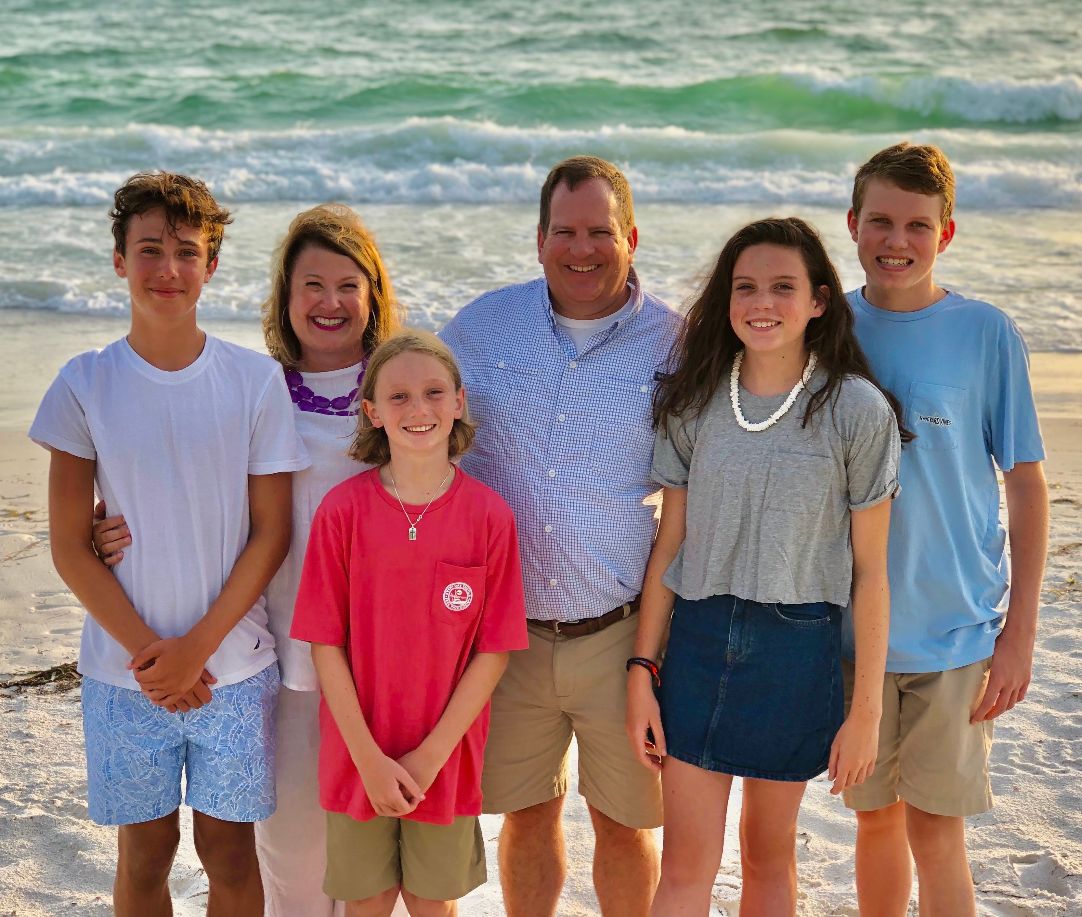
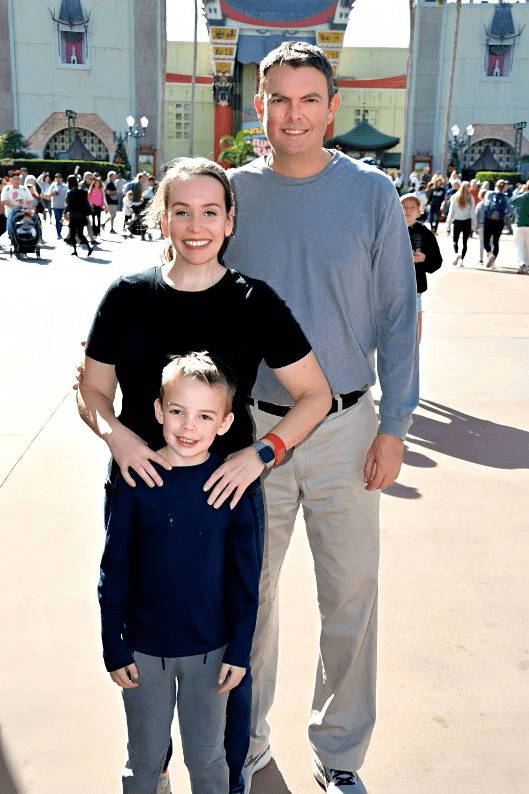
Cavins Tull Dulle Family–2019

I’m in a particularly good mood this morning because I get to tell you about some dear friends who can teach us all about what it means to be “our brother’s keeper.”  This 4th Quarter thing has plenty of ups and downs.  Each of us has our own experiences to enrich us, teach us, and help us grow as human beings and sometimes frustrate us and make us sad. I’ve often said I had the best job at Western and that’s true primarily because of the people I’ve met getting on and off my “train of life.”  My career was primarily to meet people and try to encourage them to be proud to be a graduate of Western Illinois University. As such, I traveled the country like a peddler with my trusty archaic slide show in hand. We did around 70 of these events per year and my travels took me from coast to coast, north to south, and east to west.  

On occasion I was privy to hearing stories about their lives and how they became the people they became. They would talk; I would listen.  Sometimes it was vice versa, but I can assure you, it was never boring. Each of us has a “story” to tell, and it has been my pleasure and privilege to listen to many of them over the decades. My position gave me access to the “best of times” and sometimes the “worst of times” in the lives of alumni I came to know, respect, admire, and in some cases be privy to pain, anguish, and suffering.  This is a story that starts out with great promise, has a very sad bump on the road of life, and an ending that gives us all hope for the future. 

I first met Kathy Cavins when she was a student at Western, and she went on to carve out a stellar career after graduation right here at her alma mater. Her personality and skill set caught the eye of University President Don Spencer who knew just who to call when necessity required creativity, bringing diverse campus groups together for a shared effort, and the delivery of a polished and high-quality product. President Spencer thought Kathy could deliver and she did, time after time. They made a great team. Then she left Western. Just like that she was gone.  She still stayed close by as a VP and Dean of Students at Illinois Wesleyan University for six years.  Then the big move to Texas Christian University where she met Ashley Tull. She fell in love with both Ashley and TCU. 

At TCU the Tulls met Jamie Dulle who was earning a Ph.D. and working for the Dean of Students.  Where was Mr. Donald Dulle, prominent lawyer and professor at Wright State University in Ohio? Tragically, he had died, and Jamie was left to raise two sons, Boston (13) and Braylen (11). Before he died, Jamie had promised Don that she would finish her doctorate, and she did. It was a festive accomplishment, and it was time for the Dulles to move on to the next stage of their lives. Here’s where life got dark, very dark.  Braylen spent the night at his friend Zach’s house.  After almost eight years without their dad, they wanted their mom to start dating.  They were excited for her that this was her third date and began to see the benefits of having another grown-up in their lives. Tragically, that night three months after getting her Ph.D., Jamie was killed when her car was hit by a drunk driver.

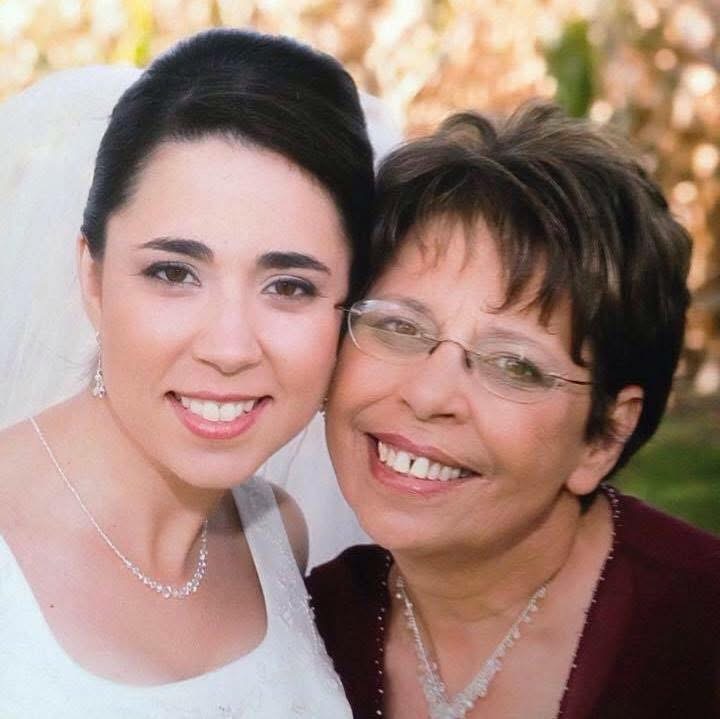
Boston & Braylen at their mom, Jamie’s Ph.D. hooding ceremony.

Braylen is by nature a glass half-full kid and very sensitive to the needs of others.  Suddenly and out of nowhere Boston and Braylen were alone in the deepest sense of the world. Two boys, both parents taken from them, alone in the world.  Early that morning when Kathy got the call about Jamie, she called Ashley to go to the hospital because she was in Los Angeles for a meeting.  He was told to go get Braylen at Zach’s house.  When Braylen saw Ashley, he thought he was there to take him to practice (Kathy and Ashley helped with the kids when Jamie was busy with school or travel).  Ashely told him that his mom had been in a car accident and his first concern was his brother.  Braylen’s world was completely shaken, but in that little body was a mountain of hope.  Every “what if” situation was workable to Braylen.  If she couldn’t walk, he and Boston could help her.  If she had to be in the hospital for a long time, he could visit her after school.  He knew she would be able to get a new car, so that was going to be OK.  Braylen had it all figured out until the doctors told him two days later that their mom was not going to wake up.  You could see the terror, the wheels turning in his head.  He looked at Ashley, then at Kathy, his grandparents, the chaplain and said, “I’m 11 and I have NO PARENTS!!”  And just then, Braylen knew that his life changed forever.  Could the world get any darker, any more helpless for the Dulle boys?

Then positive things began to happen. The accident was on March 9th, so it was decided to keep the boys in school to finish the year. Ashley and Kathy offered to help, and soon the boys were living with the Tulls. Ashley and Kathy became temporary then permanent guardians. They are now permanent legal guardians and did not adopt the boys as it was important for the boys to retain the Dulle name.  As Kathy told me, the boys are resilient beyond measure and active in school activities. Boston is in college; Brayden is in high school.  The Tull household has been busy, and the boys have brought additional energy and excitement to the Tull household, joining Tull’s daughter and son insuring there will never be a dull moment. 

Kathy puts it best.  “It just came naturally to do what they did after losing Jamie. The real credit goes to Boston and Brayden who have stepped up to the plate and stayed strong throughout living lives that would make their parents proud. The boys could have become morose and negative but instead they took the high road and showed bravery and thankfulness every step of the way.” As the Tulls say, “the boys are the real heroes of this story.” There must be an important lesson here about doing the right thing, strength, perseverance, and graciousness as they are all excellent descriptors of a story about adults and children who rose above the ashes to create their own destinies. 

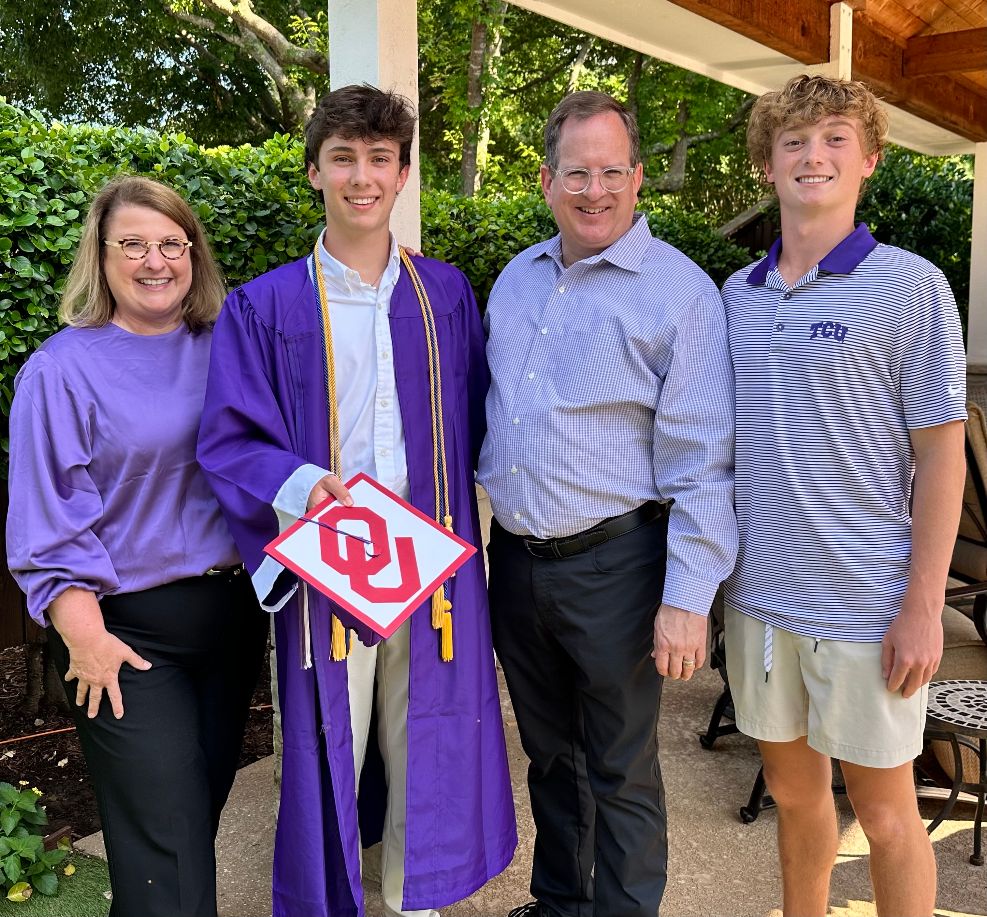
Boston’s high school graduation–June 2024

Boston and Braylen have been a part of Ashley and Kathy’s family (and the Tulls theirs) since March of 2019.  According to Kathy, Jamie would be so proud of her boys.  They’re resilient beyond measure.  They’re good kids that are more optimistic than their circumstances would prescribe.  Don and Jamie Dulle taught their children how to live by example. Their favorite exchange in explaining their unending love was, “forever and a day longer.” For the Dull boys their “forever” ended on that tragic March afternoon, but they are living “a day longer” with dignity and respect for perpetuity. God bless the Tull and Dulle families. You inspire all of us to be all that we can be. 

Because She’s My Friend

Gordy, Diane, & Ava Taylor–Kevin & Gayle Conolty (2018)

Thanksgiving is my favorite time of the year and a time to do just that, “be thankful” and for all of us lucky enough to have made it to the 4th Quarter of our lives, take a few minutes to reflect on your many blessings. Think about that for just a minute. We all have our challenges as we age, and health is surely one of them. But if you ever feel “blue,” close your eyes and think of the kids at St. Jude’s in Memphis and suddenly that gives your own health concerns some perspective. As long-time good buddy, Mike Burke, has reminded us many times, “it could be much worse.”

With the thought of “giving” in mind, I happened to come across a Western News “Across the Miles” column I wrote in 2001, and it demonstrates this construct perfectly. I will let it speak for itself.

I entered the house as I frequently do Monday through Friday at 5:25 p.m. prepared to get my daily dose of the evening news.  Today would be different.  Diane met me at the door and said she taped something from the “Oprah Winfrey Show,” and she wanted me to see it.  I moaned.  “I’m a guy, I don’t watch Oprah, I need to watch the news.”  I took a second look at Diane then promptly sat down on the couch to watch the tape.  There would be no evening news tonight.

For the next 15 minutes, the story on tape reaffirmed why we exist on this planet.  There, on TV on Oprah, was Western graduate Gayle Johnson Conolty ’79 and member of Sigma, Sigma, Sigma sorority, and her good friend and cancer survivor Pam O’Malley talking openly about Pam’s ordeal.  Oprah was doing a program on cancer survivors and the people who had helped them.  Oprah referred to these individuals as “angels without wings,” Gayle is married to former WIU quarterback Kevin Conolty ’79 and resides in Batavia, IL.  They are parents of daughters Karolyn, Kristin, and Kimberly and son Cameron.  Pete and Pam O’Malley also live in Batavia and are parents of four daughters:  Meghan, Erin, Maureen, and Eileen.  I know daughter Meghan as she was a member of Western’s Student Alumni Council.

Gayle and Pam became friends, but how close they would become, neither of them probably ever knew.  In December 1999, Pam was diagnosed with breast cancer and after surgery and chemotherapy, the attempt at a mastectomy reconstruction did not go well.  Pam had an incision 5 inches across, 4 inches down, and 2 inches deep in her chest.  You could have put a man’s wallet or a deck of playing cards in that hole.  As I watched the Oprah tape, I started to cry.  This visual hit me like a ton of bricks.  I thought of my own wife and daughter and then of my mom’s terribly scarred body after she had a lung removed during her battle with tuberculosis.  As I watched Pam, I was amazed at her strength, her determination to recover, her will to live, and the incredible power of her friendship with Gayle.

For weeks, Gayle came to Pam’s house at 7:30 a.m., 2:30 p.m., and 10 p.m. to change the dressing on Pam’s wound.  Pam relates it was simply too much for her family to address; they just couldn’t do all that needed to be done.  It was Gayle, who as Pam says, “Provided certainty in an uncertain time.  She was my everything.”

The tape ended; I called Gayle.  A week later I was sitting at her kitchen table sipping a lemonade visiting both Gayle and Pam.  The two women were very much at ease; I was not.  The conversation was direct as they talked about what had become their mutual ordeal.  The words mutilation, ugly, depressed, scared, painful, and fear literally cut through the air.  This was not a story for the faint of heart, but it was gripping.

I learned that each time Gayle came to Pam’s house, the two friends would talk about kids, the news, school, anything but cancer.  They found humor in the oddest places.  One morning after a drive to chemotherapy treatment in Chicago (yes, Gayle did that too) the two women sat alone in a hospital room.  As Pam sat on the bed where she would receive treatment, Gayle began to push buttons to adjust the bed—height, curvature—you get the picture.  When the doctor entered the room, he was not amused and told Gayle to treat her mother better.  The two ladies broke out in howls of laughter as they are about the same age.

While Gayle would listen to Pam, she never allowed her friend to wallow in pity; there were more important things to do, like make the best of a difficult situation.  During the taping, Oprah asked Gayle why she did it; why three times a day, seven days a week for six weeks followed by five months of chemotherapy she did what she did.  She replied quietly but forcefully, “Because Pam is my friend.”  As in the holiday “It’s a Wonderful Life,” Oprah closed her show by referring to the Gayle Conoltys of the world as “angels who just don’t have their wings yet.” 

Meghan & Pam 2006

Sadly, Pam O’Malley passed away in 2007 but her inspiring story lives on.  Noted CBS-TV commentator Charles Kuralt once said, “It does no harm once in a while to acknowledge that the whole country isn’t in flames; that there are people in this country besides politicians, entertainers, and criminals.” People like Gayle Conolty.

 A life worth living is about people who make it so for each of us.  Think about it.  Can you name 10 people who have won the Nobel or Pulitzer Prize?  The last five Heisman trophy winners?  The chief executive officers of five Fortune 500 firms?  Probably not.  Most of us don’t remember yesterday’s headliners.  Yes, they were the best in their respective fields, but their importance to us diminishes over time. 

 Now take a moment and list the people you can always count on, the people who were always there for you, the person who taught you to swim or read or ride a bike.  These are the real heroes in your life; people who, in some way, will remain with you forever.  Gayle Conolty shows us that we can all make a difference.  What are you doing to make a difference? 

Have a wonderful Thanksgiving.

The Reunion

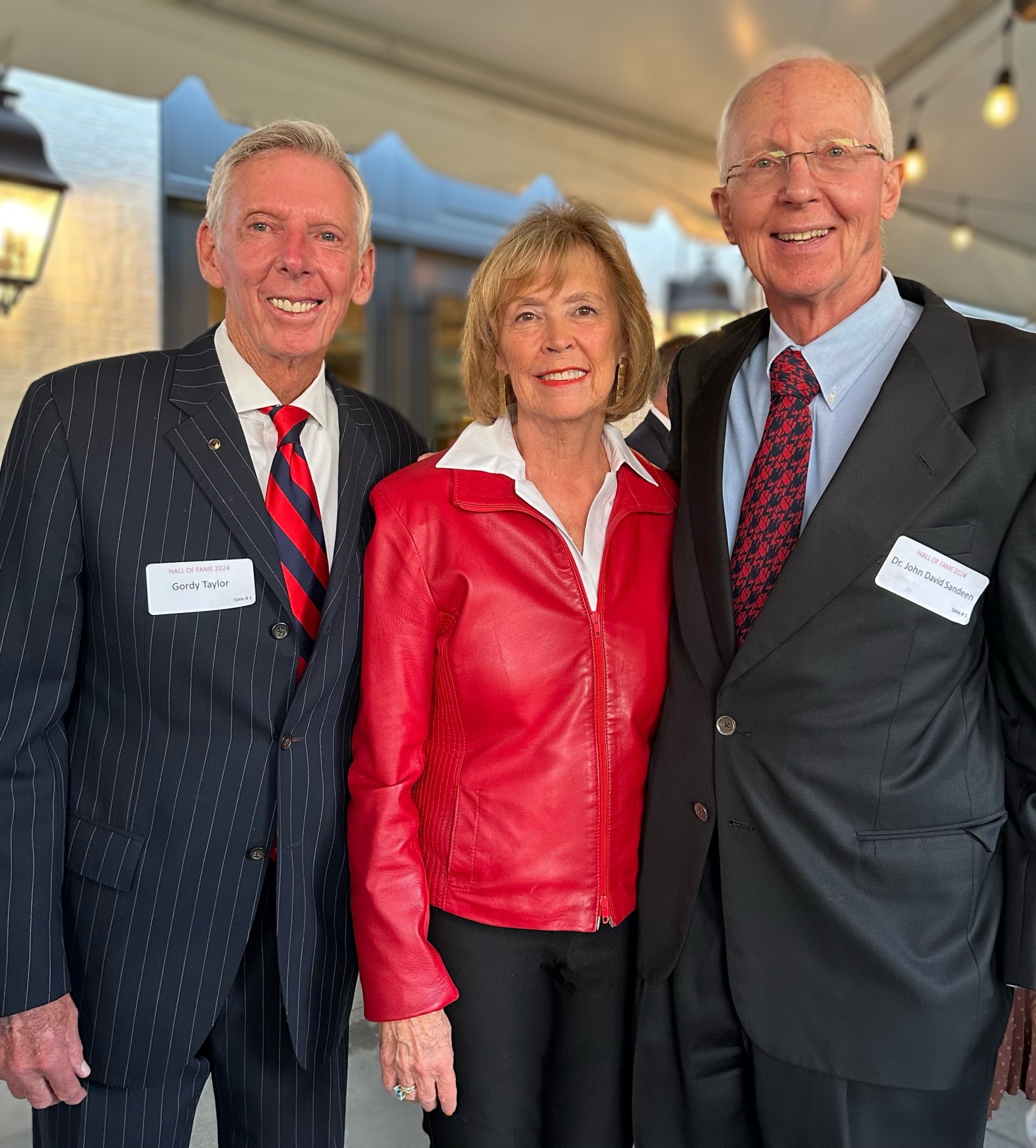
Hinsdale Hall of Fame Dinner 2024. L to R: Gordy, Diane, & John Sandeen. Mike Mason ’64, Gordy, ’64, John Sandeen, ’64 (HOF Inductee 2024), Bill Zillman, ’63. Class of 1964 HOF attendees: Cissy Mohlman Webb, Richard Sherman, Gordy, Craig Baab, Bruce Fogarty, Richard Pavek, John Sandeen, April Holub Long, & Mike Mason.

It had to happen; it did; I’m delighted.  I was there to participate. Of our class of 624, 45 of us attended the 60th class reunion of the Class of 1964 at Hinsdale Township High School. We are senior citizens and clearly on the “mature end” of members of the 4th Quarter.  Yes, not everyone made it as some not interested, others too far to travel, others with health issues, and sadly, a good number on the other side of the grass.  The weekend began with a Hinsdale Central Hall of Fame dinner on Thursday night and Dr. John Sandeen, one of our classmates, was inducted. On Friday it was a tour of what is more like a small college campus than a high school and very impressive in every way. The football game was Friday night and Hinsdale Central defeated Morton 56-0, so we were clearly on a roll. The play-by-play announcer called out the various reunions in attendance at the game.  A roar went up for the children of the Class of 14 and a little more subdued for the folks from the Class of 04. Then it was time for 94, then 84, and finally a huge roar for 50-year reunion attendees from the Class of 74. And then it happened. The announcer spoke clearly, as if anyone was still listening–“Anyone here from the Class of 64?” There was a shallow echo from the nine of us who had endeavored to stay up beyond 8 p.m. for a night game.  Of course, we all departed at halftime as we had to return to our hotels which required, of all things, driving up Route 83 at night.  

The parade was at 9:30 on Saturday morning.  It was sort of cute—so many young people running around with all that energy.  There was a group of us standing at the intersection of First Street and Washington as what appeared to be a John Hughes movie unfolded with lots of convertibles, cheers from red and white uniformed high schoolers with school spirit everywhere.  It felt like we were back in the sixties with two modifications. First, now the school offers 32 different sports, think of it—32!  How many did we have?  Secondly, it was like the United Nations on parade.  Progress in action in suburban Hinsdale.

Time for the main event on Saturday night held at a local watering hole in Clarendon Hills. No cover charge and only expense was your own beverages. This now makes for a very cheap night for the Taylors as I remain tethered to PEG the omnipresent feeding tube. Diane and I strolled in around 7 o’clock, and things were already underway. We got our nametags and began to mingle. Diane knows my classmates from past reunions, so we each sort of did our own thing. That’s not exactly true, as Mrs. Taylor became the unofficial photographer, so she was quite busy.

I looked around at the 45 or so brave souls who had ventured out to see “what everyone looked like” after 60 years. Think about it—60 years. I was stunned as the same cliques/groups from decades ago were all represented i.e. brainiacs, class leaders, jocks, simply nice kids (work after school, played minor sports, just middle of the road kids).  But none of that mattered, none of it. We were all just a bunch of almost 80-year-olds, who for this one night were kids again, catching up with our classmates. It made no difference if you had been an executive, a doctor, a lawyer, a repairman, a postal worker, a teacher, a homemaker, an electrician, a plumber, or anything else. No one cared what we did “for a living.”  Everyone was on the same plain regardless of wrinkles, weight gain, hair loss, or even someone with a PEG. We were all the same. I wondered, “Had we matured or just too much trouble to put everyone into a specific silo?” I opted for the former. 

Maybe, just maybe we were following the words of English writer Oscar Wilde who once said, “Be yourself, everyone else is already taken,” and so we did. Stories were told and certainly embellished and photos, lots of photos to share. We heard of deceased spouses, choices good and bad made by our children, and questions about lost classmates. It was funny but ALL our grandchildren and even great-grandchildren are perfect—every single one of them.  We found out some of our classmates were gay; no one seemed to care. Again, another sign that maybe as we go deep into the 4th Quarter of our lives, we are maturing as functioning human beings.  I didn’t hear one mention of politics, or even the names of Trump or Harris. Clearly, our class has representation on both sides of the aisle, but it just didn’t seem to matter. 

There was a word I heard mentioned quite a bit as I moved from group to group—HEALTH. We range from those who seem to be the perfectly healthy to those who appear to be just “hanging on,” but God bless everyone for attending. Our lives were enriched by reconnecting with our past as we prepare to embark on our future.  Certainly glad Diane and I made the trip from Macomb. There is talk of #65 in 2029, but I’m not so sure. No one jumped up to coordinate the effort but who knows.  For sure, this effort was a success.  I’m grateful to Mike Mason, Joe Lascola, Karen Kemmerling Harbour, Roger Treend, Carol Skeels Nambo, Dawn Phillips Post, Deborah Barile, and everyone else who made the effort to bring us together. 

The 4th Quarter moves ahead…

Keys

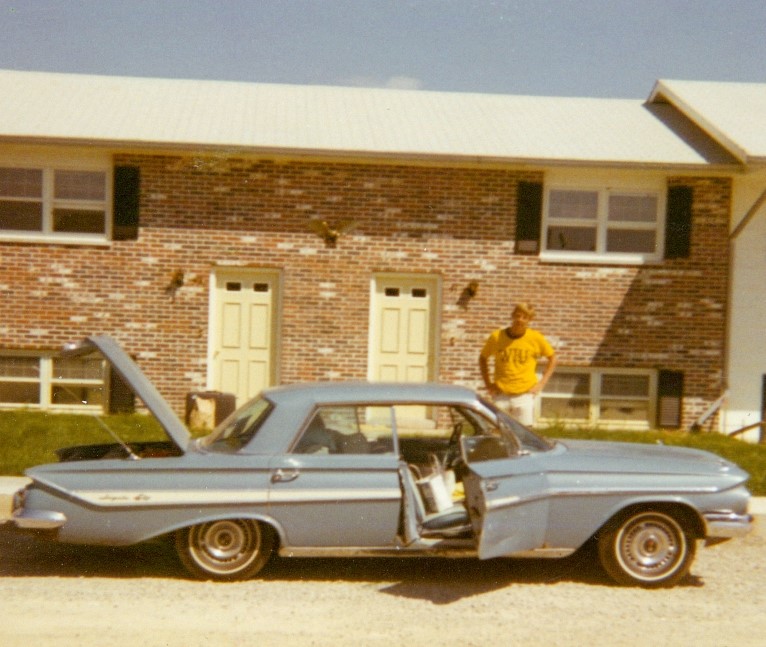
Macomb Arrival 8/1970 from U. of FL “1961 Chevy”

When I put my once nimble fingers to the keys, I always hope something cogent or germane will be the result. Each time I try but some blogs “connect” better than others. And then I realized, I am not the only person facing this 4th Quarter conundrum that comes with advancing age. This week I read an editorial in The Week that I feel is worth sharing as it is clear, to the point, and expresses succinctly what lies ahead for all of us. The author is William Falk, and I reprint his thoughts with a couple of minor changes:

When I took my mother’s car keys away, she cursed at me. I’d never heard my sweet, churchgoing mom use language like that in my life, but she couldn’t accept that at 85, her fading vision, hearing, and memory made her unsafe at any speed. I was reminded of the day Mom followed me to the door shouting “Give me back those #@$&%! keys” when Joe Biden spent several weeks insisting against all evidence that he was fit to serve four more years. Giving up the most powerful and prestigious job in the world, obviously, is more painful than losing access to the Camry.  But the denial and the anger are fundamentally the same. Getting old, I’ve found, demands a succession of surrenders. You can accept these losses with some grace and rueful resignation—or go to war with the inevitable. Pro tip: You can’t win.

I’m still more than a decade from Biden’s stage of life, but if I put on my glasses, I can see the shape of it on the horizon. Behind me, the path is long and littered with losses large and small. Joints worn out from years of running, basketball, softball, and typing take turns complaining, and the mirror reveals a graying old guy I sometimes do not recognize.  Too many loved ones and friends are gone. 

Yet life has pretty much worked out as I’d hoped, but the surrenders continue. The best strategy, it appears, is to accept them and fall back behind a new line of defense and prepare for the next assault. I know how you feel, Mr. President. When they come for my car keys, I suspect I, too, will curse.

As I wrote a couple of blog entries ago in “Transitions,” this is precisely what is happening to me, and I surmise to most of you to greater and lesser degrees. “A succession of surrenders” is happening to my friends and me, and it is inevitable though we fight tooth and nail to “hold on” to our lifestyles as long as possible. Lately, I’ve hit another of those proverbial bumps in the road, this time a lower back that will give me no rest or comfort. Gordy Taylor needs a shoehorn to put on his left tennis shoe and strives mightily to tie his own shoelaces. I roll over in bed all night vainly attempting to find a comfortable position to no avail. Some nights, I can be found at midnight walking up and down the cul-de-sac just hoping to get tired enough to fall asleep despite it all. I now walk like Joe Biden. 

“Dr.” Diane and Primary Care Physician Dr. Curtis Farr have made countless phone calls and fought the insurance battles to secure X-rays and an MRI. I’m confident there will be relief down the road, but the journey is frustrating, and the small losses begin to take their toll. There is no giving up and you’ll have to pry those keys from my hand. As an old woman I met on the beach once told me, “Young man (it was a long time ago), every day above ground is a great day.” She was correct.  I need to remember that tomorrow and the next day and the next day.

Yet, through all this, life provides us with humor, and I’ve learned to treasure those precious moments. Daniel Conrad Taylor is five and a half (the half is very important to this young man), and last month we were in Grayslake visiting him. His parents were there as well, but it was Dan and Lady the Wonder Dog we were there to visit.  There is a cute little Lilypond in their backyard, and we caught a crawdad that had made the mistake of venturing outside the pond periphery.  I held him up and Dan clearly remarked, “That will really piss him off.” Now I didn’t teach him that phrase, so I looked over at Ryan, who of our three children, probably uses “colorful” language least often, if ever.  However, as it relates to crawdads, this might be the exception.  I tried not to laugh, unsuccessfully, and Dan exclaimed, “Gramps, this isn’t funny.”

A couple of weeks ago we were in Chagrin Falls, Ohio (outside Cleveland) visiting Gordon III, Lisa, and their family. We had not seen Ava (12) or Kent (7) in over a year. Consequently, they had not seen Grandpa’s feeding tube. Kent, a fledgling scientist in training, asked if he could see how it worked.  I quickly obliged. Kent surveyed the tube protruding from my stomach, gave it some thought and then remarked, “I wish you didn’t need that but because you do you are still here with us.”  Grandma and Grandpa smiled at his thoughtful and insightful comment.

Time to find those damn car keys before someone else does.

ED

Ed Holzwarth

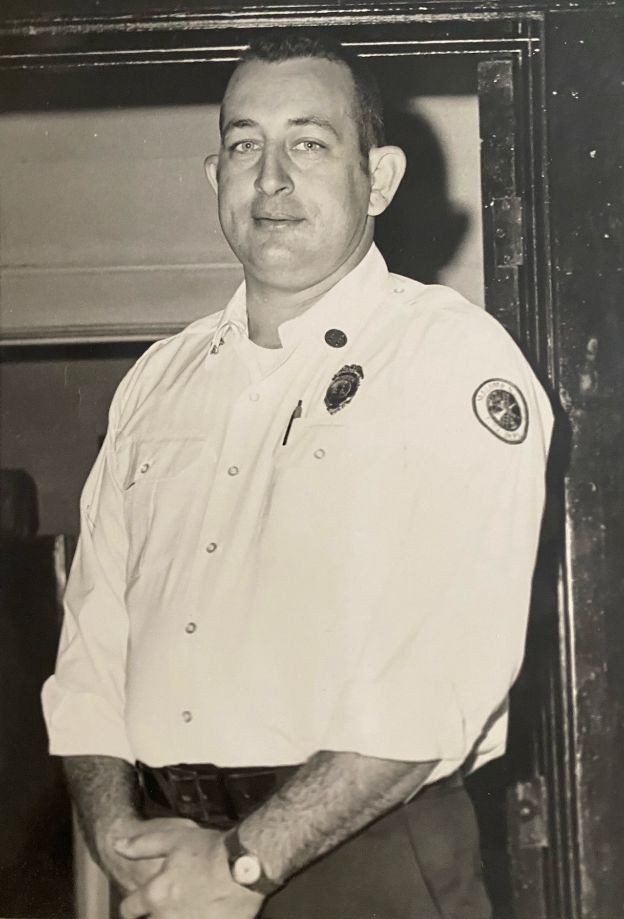
Everyone in Macomb knew Ed Holzwarth. Everyone also respected, admired, liked, and revered him for the way he conducted his life. Last month, “Big Ed” all 6’3″ of him departed my train of life for the final time. He said goodbye to his wife, Sue, his son Mike, two daughters Sue and Sandy, seven grandchildren, two great grandchildren and countless friends he had made and cultivated over the decades during his years in Macomb. Ed was born in 1936 thus leaving us short of his 88th birthday. He was a large man, not just in stature but in deeds. When he entered the room, we knew it. Ed had arrived. We first met when I was teaching and he had just become Fire Chief in Macomb, a position he would hold until retiring in 1991 to, you guessed it, spend more quality time with his grandchildren.

His resume was impressive—Jaycees, Kiwanis, McDonough County Heart Association, YMCA Board of Directors, Boy Scouts, Bomber Boosters, Leatherneck Club. He pretty much did it all. I had the privilege of making him an Honorary Alum of Western in 2000, and he was inducted into the WIU Athletic Hall of Fame in 2006.  Ed joined the U.S. Army in 1955 serving with distinction. I could go on, but you get my drift. Ed was a community activist in every sense of the word. Yet, this doesn’t really get at the essence of the man. Yes, Ed Holzwarth was a strong leader. He didn’t just join organizations; he led them. He was not just the Fire Chief but a national leader. What really stands out is that he was a man of the people. He absolutely thrived on helping others and simply couldn’t get enough of it. Helping his grandchildren hone their athletic skills was a labor of love for him. He “opened” up the fire house over the Christmas holidays and encouraged families to stop by for a tour. He did things like that. He was a “bingo caller” at city picnics. Who does that? Ed Holzwarth does. 

As a kid from Calhoun County, he played baseball and basketball and excelled at both. He was given a chance to try out for the Washington Senators Major League team but had to pay his own way to tryouts and couldn’t afford the trip as there was work to do in the fields. He became a legend in the Macomb area for his fast pitch and slow pitch exploits. He loved the St. Louis Cardinals and attended games every year with as many family members as he could take along. I had lunch with his daughters Sue and Sandy last week and when asked to define their dad, they smiled, and with tears in their eyes said, “He was just a big kid who would do anything for anybody.”  Grandpa took the kids down water slides in the Wisconsin Dells and dislocated his shoulder riding a minibike that was just not capable of handling a man of his size. However, he did it anyway because it was with his grandkids.

As I got to know Ed over the years, it was apparent that he was a true servant leader, a nutritious person with a beautiful spirit.  And here’s where the Holzwarth story becomes special. It was not just the job as chief or role of father, or Little League, or softball coach. It was about the things he did that really went beyond what would be expected of any of us. He never let a woman open a door for herself. He was the consummate gentleman and friend to anyone who needed encouragement or a warm smile. Ed was THE volunteer hospice guy at McDonough District Hospital and was always there to help others during their final darkest hours. He drove forty miles to Hamilton, IL, to visit an elderly house-bound woman, forty miles each way, week after week. On Halloween one year, he dressed up as Raggedy Ann. Can you visualize this 250-pound, 6’3′ doll prancing around local nursing homes. But he did it! The sick and disabled loved it. He once installed a window air conditioner for a hospice client. That’s Ed–always giving to others, expecting nothing in return except knowing he was doing the right thing.  The world is full of “givers” and “takers” and Ed Holzwarth is the former in every way.  

Fire Chief Ed Holzwarth

I have my own Ed Holzwarth story—of course I do!  In 1979 I had just gotten the alumni job the year before and I was trying to finish up my doctoral dissertation. Professionally, this meant everything to me as it was all that stood between me and a Ph.D. One night in November 1979 our phone rang at 4 a.m.; it was Ed. “Gordy, the Alumni House is on fire, you better get over here.” I was there in five minutes and Chief Holzwarth inquired, “Anything important upstairs?” I about had a heart attack as the only copy of my unfinished dissertation was upstairs. After the fire was brought under control, Ed allowed a public safety officer to escort me inside. Here’s where it gets funny. As the officer and I got upstairs, I was feverously throwing papers in boxes when the officer felt the need to get on his intercom and say, “I’m upstairs at the Alumni House with Director Taylor retrieving important alumni records.” I stopped in my tracks in a smokey room and exclaimed, “Alumni records be damned, I’m getting my dissertation out of here.” Close call for Gordy plus the Alumni House was saved.

There is just a bit more to my “fire story.” After Ed retired, his successor was the capable and dedicated Don Bytner who clearly had big shoes to fill. In August 2000, Damone’s, a fine dining establishment where Diane and I spent many memorable evenings, burned to the ground. In December of that year, the Delta Sigma Phi Fraternity, of which I was advisor also burned to the ground. When we awarded Ed the Honorary Alumni Award at our annual Evening with the President and Mayor community event, Don Bytner was in attendance. From the podium, in good jest, I announced, “Between you two, the Alumni House, Damone’s, and the Delta Sig house all had extremely serious fires.” Ed and Don didn’t miss a beat and together proclaimed, “And the only common denominator between those three fires is you and we’re watching.” It brought down the house—humor in a small town amongst friends and colleagues.

As the years passed and Ed began to have serious health issues, he still attended as many community and athletic events as possible. He was particularly fond of WIU Leatherneck basketball, both men and women. Ed would attend every home game with Sue and his daughters at his side. After the game, win or lose, the women basketball players would ALL come over and give Ed a hug, and he both loved and appreciated it. Then, at some point, the men began to do the same thing. Incredible to watch. 

When the end finally came on July 8, 2024, a pall fell over the whole community. As was said when Abraham Lincoln died, “now he belongs to the ages.” An iconic figure to be sure has left us, all of us.  At his funeral, Women’s Coach J.D. Gravina brought his entire team. As J.D. tells it, “They didn’t have to come, they wanted to” and so they did.  It was a wonderful moment of true love and appreciation. 

So that’s my story of my good friend Ed; a man who made us all better for having walked among us.  Ed Holzwarth, a man of faith and good cheer who knew how to make a difference and did just that. Our community salutes you.

Transitions

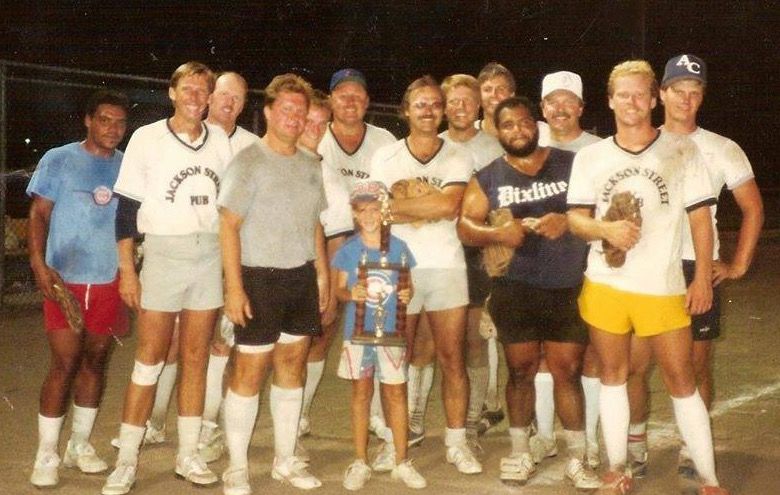
Jackson Street Pub Men’s Softball Team–1986, Ryan Taylor 6 years old, Gordy 40

We’ve made it past the 4th of July, and now it’s time to really get into summer.  I was out walking early one morning and had a couple of thoughts I’ve decided to pass along. The first involves that famous train of life we are all engineering, each of us looking back to see who is getting on and who is exiting at each stop on our respective life journeys. Those of us who are getting weathered with the passage of time are experiencing the inevitable exit of too many passengers. I guess I should have seen it coming. I was blessed with a career that took me into both the classroom and the alumni arena resulting in an extraordinary number of friendships over a 60-year period.  That is the good news—notes, emails, texts, phone calls, and personal visits have been my good fortune since I entered my first classroom in Stipes Hall at Western Illinois University in 1970. It has been nothing short of rewarding in every way, but now the Grim Reaper has decided to exact his pound of flesh and a week seldom goes by without the departure of one of the passengers on my train. The 4th Quarter continues to move forward and as it does so, my passengers seem to be getting older as well with stops on their last ride with me becoming more frequent. This is inevitable. I accept it and am grateful to know and have known so many wonderful people over these many decades. 

I am happy to report that new passengers, though not as many as in the past, continue to come on board. Diane and I are very grateful that Luke (20), James (16), and Paul (13) Stevenson have boarded as well as Ava (12) and Kent (7) Taylor and Dan (5 ½) Taylor bringing love, happiness, energy, excitement, and the promise of tomorrow to their fellow passengers. Yes, grandchildren give us hope that someday they will be better stewards of the world and its resources than we have been. Chug, chug, chug—not as fast as before and the hills a bit tougher to climb but for each of us, our train on the road of life moves ahead.

Lately, I have had occasion to ponder my life through adulthood and how it has changed since the end of the 1st Quarter in 1971 when I began to take notice of such things. Much of my life has involved participating in various sports/athletics, so you will notice a heavy sprinkling of such references. After graduation from Western and the most important event, getting married to Diane Paulsen on August 31, 1968, we were off to the University of Florida for graduate school, returning to Macomb in 1970. This is pretty much where my final three quarters of life have played out to the present day.  In our twenties is when things take off and many of us start families. The Taylors were no different. Teaching was fun and outside the classroom there was plenty of time for softball, basketball, touch football, tennis, and jogging for me. Maybe that’s why it took me so long to finish the dissertation for my PhD—too damn much fun with sports, but I enjoyed every minute of it. 

By my thirties there was a job change from teaching to alumni programs. The 2nd Quarter (age 26-50) was a time for career building, adding a third Taylor child, and getting active in the community. I had to finally give up touch football in my 30s as I couldn’t find anyone who wanted to play anymore.  Basketball ended in my 40s when our three children, Jennifer, Gordon, and Ryan, came to one of my games.  The rascals taped “dear old dad” shooting 5 for 28.  We all laughed; it was clearly time to put away the blue Converse All-Star sneakers.  I continued to sort of play softball and tennis and jogging was still in the mix. Through all this, Diane was the anchor of the family while earning her B.A, Master of Arts, and beginning a stellar career as an English teacher at Spoon River College. While not affluent, we were living our dream.  For me, I remained very active physiologically, had the best job at Western, assumed it would never end. Close your eyes and think back for a moment. During our thirties and forties, we were at the top of our game. I could look in the mirror and not too many wrinkles, love handles had yet to appear, and had a full head of blond hair. Life was damn good.

Then the 3rd Quarter (51-75) arrived and gradually the wheels figuratively began to come off.  Diane and I continued to have professional lives, the kids had stellar high school athletic careers, graduated from college, settled down, married, and led lives of their own. At around age 60, Diane and I both retired, traveled, became grandparents, enjoyed excellent health, and were on top of the world. What could go wrong?  I’m still a jock, right?  That’s what I told myself.  Well, first there were softball and tennis. I couldn’t find anyone to play tennis, but there’s always softball, right?  Over the decades, I got to play against son Gordon and his buddies, and later son Ryan and I became teammates. He may have wanted to keep an eye on me. I went from playing center field and batting in the enviable  #3 slot to ultimately playing right field and batting 9th. One night we had the late game at 9:30. It was swelteringly hot and foggy; mosquitos were everywhere. After the game, Ryan and I were sitting on the back of the car removing our spikes when he looked over and said, “You having any fun?” I replied “No” and at age 56 softball was history. 

Still no real complaints, just minor lifestyle adjustments that affect all of us. Then in March 2010 I got that infamous sore throat and at age 64 everything changed forever. Base of tongue cancer is a nasty experience and the effects of radiation and chemotherapy, while saving my life, have left me with a bunch of parallel intrusions like a feeding tube, aspiration pneumonia, and a lack of energy. Of course, how does one delineate between fatigue caused by health issues as opposed simply to the process of aging. At age 64, jogging was the last athletic pleasure to exit my life, replaced by walking. In this 3rd Quarter I was able to keep busy with my local TV taped program interviewing noted individuals in the Macomb community and hospital.  I still enjoy working in the yard and don’t have a riding lawn mower. I’m sure many of you have begun to have your own health issues in your 3rd Quarter so none of this makes me unique. 

At age 75 or so, the 4th Quarter arrives. I still have hair although it is no longer blond but pretty much white. Weight is not really an issue since I control my intake of Jevity 1.2 at ten cartons a day through my forever feeding tube. While it seems to work keeping aspiration pneumonia issues away, I don’t recommend it as a weight loss program. The 4th Quarter has now arrived in earnest and there is no denying I am no longer the athletic guy I was.  Yet, I still walk three miles probably five times a week but the darn “energy thing” is a challenge. Maybe it is for you as well.  I’m doing my best to cope with it and try and remember the words of Clint Eastwood who when asked about aging responded that he “tries to keep the old man out.” 

For Diane and me, there is an important variable that helps us keep young at heart.  Via Zoom, FaceTime, and Interstate highways, we get to keep our kids, their spouses, and grandkids in our lives—the best “Geritol” there is and extremely grateful for our times together. 

It is probably worth posing the question of what we say to ourselves when we get up in the morning. When that first foot hits the floor do we say, “Good morning God or good God, it’s morning.”  I’ll take option number one every time.  To all of us in or approaching life in the 4th Quarter, there is much for which to be grateful, starting with our train is still traveling down the tracks, destination unknown, but even though the engine has slowed a bit, it is still chugging along.  And so it goes….

DAD

Dr. Gordon A. Taylor Sr.–1987

What follows is, with some minor edits, a column I wrote for “Across the Miles” which appeared in the Western News, the alumni newsletter at Western Illinois University.  As Mother’s Day is recently behind us and Father’s Day lies ahead, I felt it might be appropriate to share.

Summer Edition—2004

Seize the day! Make a difference! Do something! Help somebody! Every time I speak to a group this theme seems to flow effortlessly from my lips. I’ve always known the reason why, but I haven’t talked about it much until now. It has to do with my dad. He taught me a very valuable lesson that I employ every day of my life. But first, a little background information.         

Simply stated, Dad was my best friend. It was always that way. It just sort of happened. There’s a word “simpatico” which means the special relationship that exists between people when words need not be spoken, yet there is a level of peace and compassion that goes beyond mere words. We shared that feeling. My dad was always Mr. Personality—he laughed, he told stories, he entertained my friends. He was a man of the people and fun to be around. Few people knew that beneath that friendly exterior was a man dire, and I mean dire, financial straits. My earliest memories include our family’s acute, persistent money problems. Every month was a financial nightmare at the Taylor household. The mortgage, four sons, school clothes, car payments, taxes, bills, bills, bills-there was NEVER enough money, and our situation grew more desperate each year.                            

My dad was not a lazy or unskilled man, just unlucky. He was an optometrist who professionally just couldn’t make the transition from rural Galena to upscale, suburban Hinsdale. For the Taylors there were no vacations, no new cars, no new clothes, and leftovers night after night plus the constant threatening calls from bill collectors. This was the 1950s, so there was no credit card maneuvering in play here. My dad borrowed from everyone—banks, savings and loans, and finally relatives. He even borrowed money from his high school and college friends–$100 here, $200 there, just to keep us going. I knew these people. I spent time in their homes, played with their children. I will always remember who they were and what they did for us during our financial odyssey. Despite their help, it was not enough.

I came home from junior high one day to find neighbors gathered in our front yard. It was not for a picnic. The local utility company was using a huge backhoe to dig up our front yard so they could disconnect our water main for non-payment. There was both pain and embarrassment on my mom’s face when she asked if I had any money. I went to my bedroom where I kept my life savings from babysitting and mowing lawns ($34.75) safely hidden in a Skippy peanut butter jar. The water bill was $34.35, so Mom threw the jar at the poor workers and screamed at them to leave and “keep the change.”  It was one of the very few times I ever saw Mom lose her composure.  The memory of that event is forever burnt into my psyche.  Things were terrible, but they got worse.   

That same evening Dad came home from work with a U-Haul. The sadness and pain in his eyes were deep and profound as he announced in an almost inaudible whisper, “We have to leave tonight.” We all stood there in silence. We had not seen it coming. Dad went on, “The bank wants us out tomorrow. No more reprieves, no more loans, no more delays, we’re leaving!” We all had tears in our eyes as Mom asked, “Where are we going?” The reply was, “I don’t know” and with that we packed up our meager belongings.

Dad felt like such a failure. It was clear by his every move. His back was bent over, his eyes were red, he wouldn’t look any of us in the eye. He appeared gaunt; his spirit broken by a cascade of economic calamities. This, to a man who was a class leader in high school, all-city basketball player in Chicago, and civic leader as he grew older. 

At 10 p.m. the job was done, and we were prepared to leave. As we started out the back door for the last time the phone rang. The phone rang! Who could possibly be calling? Dad picked up the receiver as the rest of us went outside to wait and wait and wait. It seemed like forever. Finally, Dad came out and quietly announced “I got some money.” We unloaded the U-Haul and never spoke of that night again— never! That was clearly the worst of it, the nadir of our financial nightmare if you will. We still had some bad times, but after that horrible day, things gradually got better for our family.

Dad held down three jobs; Mom, two; and we four boys did our part as well. Gradually Dad paid everyone back. It took 20 years, but he did it. The banks, the savings and loans, our relatives, and finally his friends. In some cases, his friends said they didn’t want to be repaid; they were happy to have helped but Dad insisted.

Near the end of his life (June 1988), Dad and I were having lunch together, which we tried to do every time I got back home. Table 23 at the Cypress Restaurant in Hinsdale was our little piece of paradise. This would be a lunch like no other in my life before or since. At some point, I mustered up my courage and finally asked THE QUESTION. “Dad, why did you pay everyone back?” He certainly didn’t have to. Mom and he never had much of their own since they’d spent their entire adult years paying back all those loans. My question prompted Dad to get a twinkle in his eyes—he was excited. It was as if he’d been waiting a lifetime for someone to ask him that simple question. A big smile came across his face that had known much adversity in its 74 years and he spoke.

“Gord, when you and your brothers were growing up, I could never give you much—no car, no fancy clothes, no money for college, not even any spending money. But I did what I had to do. The measure of a man or woman is not the size of the house they live in, nor the type of car they drive, or even where they buy their clothes. The true value of an individual is what they stand for and how they live. Yes, I could have given up, but I wouldn’t. It was important for me to show you the importance of dignity, self-respect, pride, and integrity. I had to pay everyone back. It was the right thing to do.”

I got up from my chair, walked around to where my dad was sitting, hugged him as hard as I’ve ever hugged anyone in my life and whispered “Thanks Dad.” It was simply all I could say, but I knew how much it meant to my best friend. It was a seminal event in my life.

Dad was gone a month later, but his legacy lives on. He taught me that the most important things in life aren’t really things at all; that while we can’t all be Nobel Prize Laureates or find a cure for cancer, we can all make a difference in this world if we choose to do so. My dad lived by a simple creed which good friends Jim ‘72 ‘73 and Suzi Miner ‘72 ‘73 were kind enough to frame for me. It hangs in my office and reads:

It’s not what you get; It’s what you give.

It’s not what you say; It’s how you live

It’s giving the world the love it needs

It’s living the life of noble deeds

Strong for the right, the good and the true.

These are the things worthwhile to you and to you and to you.

That quote says about all that needs to be said. What we do for others does make a difference. It doesn’t have to be big—it just must be. It can be a smile, a hug, an attaboy, or a pat on the back. My family endured our economic crucible. It wasn’t easy, it made us stronger, and we survived because my dad knew no other way.

Be sure you don’t miss your opportunities to do the right thing to make a difference, in this, what for most in receipt of this, is the 4th quarter of our lives.  It will give increased meaning to your life and maybe even put a twinkle in your eye as well.  From a grateful son, Happy Father’s Day, Dad, I love you.

A Nice Man

Harry James Paulsen–1943

Like many of us in The Fourth Quarter, I have been mesmerized the past couple of days by the important attention given to the stories of June 6, 1944.  I listened to the riveting words of President Reagan in 1984 in the cemetery in Normandy where 9,400 brave young men, who never got to experience full lives, but instead gave theirs so that I might type this to you today and for eternity.  Yesterday, President Biden spoke eloquently about the sacrifices made by young men who did so unflinchingly and without hesitation because the freedom of the world was at stake.  And today, more moving words at Pointe du Hoc.

Then it dawned on me.  I know a person who, while he didn’t arrive in the first wave, came ashore in Cherbourg a couple of months later.  His name is Harry Paulsen, and he is my father-in-law.  I wrote about Gramps in the Western News, the alumni newsletter of Western Illinois University.  I share his story with you on the 80th anniversary date of D-Day.

Spring 2001

I tend to write about people, and I think I know why. While I’ve had the opportunity to see many places and things in my life, it’s people who interest me most – large ones, small ones, different colors, ages 1 to 101, career- driven, family-oriented, nice, not-so-nice, personable, distant-they all have a story to tell. Harry James Paulsen, Jr. is one of those people. He is my father-in-law.

Harry Paulsen is not a millionaire. I don’t believe he’s invented anything. He doesn’t drive a fancy car or live in a mansion. He was never a great athlete, didn’t go to college, and has never had a high-profile job. Yet, Harry Paulsen is indeed an extraordinary man. Born in 1921, he married Anna Arnoldsen in 1947. They have four children—Diane, Arne, Paul, and Ruth, and nine grandchildren. Harry Paulsen has lived in the same house in Winthrop Harbor for nearly 50 years and at age 79 he still works. He’s a printer by trade.

What makes Harry Paulsen unique is the way he has lived his life. In a world of flamboyant, headline seekers looking for their 15 minutes of fame, Harry is EVERYMAN. Since he was a young boy, he’s never known life without a job. He has not missed more than a handful of days of work in 60 years. He has always paid his bills on time, prefers hamburger steak to lobster, still mows his own lawn, prefers overalls to a suit and in the 33 years have known him, has never uttered a profane word. He goes to church every Sunday, he’s handy around the house, he likes to take walks and his major indulgence is chocolate Nonpareils candies. He seldom imbibes in alcohol, has never smoked and rarely raises his voice in anger.

In 1943, he began his stint in the army. He served with distinction in the 104th Infantry Division (nicknamed the Timberwolves) as a medic.  In Harry’s own words, “We landed at Cherbourg, France in landing craft boats in September 1944 which was several months after D-Day.  Our mission was to link up with the British and Canadian armies which we accomplished in Holland.  On October 29, 1944 I was wounded in the leg and chest by German artillery shrapnel near the town of Breda, Holland. We were the first casualties of our Battalion Aid Station.” Harry James Paulsen Jr. received a Purple Heart.    

Harry Paulsen is a quiet, introspective man. You know the type; they don’t say much but when they do we listen. Sometimes those who say the least really are the ones who say the most. Their actions speak volumes. As I age and hopefully mature, I no longer walk into a room and look for those who are speaking the most or the loudest. I look for the people who are listening. You generally learn the most from them.

Harry is a man I have grown to admire, respect and in the highest praise I can give, love as if he were my own father. Harry believes in hard work. He taught life lessons to his children by example. He never complained, he never made excuses, he just did what he had to do and expected the same from his children. All four of his children are successful college graduates, including four WIU degrees. He and his wife, Anna, helped make that possible by defraying as much of the financial burden as they could when their children were in college.

Harry is an unpretentious, modest man who earns respect by the way he lives his life. He is part of Tom Brokaw’s Greatest Generation, those men and women who put their very lives in peril so that future generations could live in prosperity and peace. We all have our own Harry Paulsens in our lives. They are caring, decent people upon whom the success of this nation has been built. They might be 25 or 105, man or woman, but they get up every morning and simply go about the business of life as best they can. They might be a grandparent, a parent, an aunt, an uncle, a sibling, a son, a daughter or the neighbor down the street. They are simply people, who in the conduct of their daily lives, serve as role models for the rest of us.

In Harry Paulsen’s case, it was his generation who helped give us the college students of the 1960s-1970s. They asked for little but accomplished much. They taught us that the value of a human being is not in what we have, but in who we are. Did we listen? They are, as Brokaw says, “The men and women who have given us the lives we have today.

Harry has discovered what many seem to be seeking—simplicity and comfort in a life well-lived. He’s always been an individual who took the words of noted humanitarian Albert Schweitzer to heart, “Example is not the main thing in influencing others, it’s the only thing.” Take a minute and say thank you to the Harry Paulsen in your life. For me, I can simply sit back, wait for the Western News to arrive at his doorstep and in the words of Jackie Gleason’s Ralph Kramden of “The Honeymooners” say, “Harry, you’re the greatest.”

And I DID!  I happened to be with him as he was reading the Western News when it arrived.  He was not one to tear up much, but Gramps did that day, and so did his son-in-law.

Coach

Sometimes this whole 4th Quarter thing “gets to me.” I never thought the day would come when going for a walk would make me tired and require a nap afterwards. The same goes for mowing the yard or doing yardwork. Being required to sit four times a day to consume a total of ten, eight-ounce cartons of Jevity 1.2 then also another four sittings to ingest regimens of medications is burdensome. I admit that in the grand scope of things it sucks but then in a broader context it could be a whole lot worse. 

I tell Diane that we can still travel with cases of Jevity in the back of the car. We do get to sit together at night, her eating real food and me “eating” in my own tortured way by pouring all liquid sustenance into PEG (the feeding tube); however, it does keep me alive and sustained nutritionally.  Everyone’s 4th Quarter is different and before it’s over, I assume most of us will suffer our own trials and tribulations moving forward in life.

Lately I have been going through files and discovered a folder with copies of columns I wrote (with assistance from Diane Taylor and Cathy Onion) for WIU’s Western News. What follows is one of my favorites as it is not only inspirational but also tells the story of a man of great courage and dignity who never, and I mean never, ever gave up.

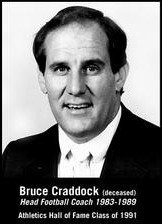
The column was written in 1996 about a man who graced this earth for 46 years in conventional terms but who nevertheless never had admitted his life was anything but spectacular. One of the great privileges of my life was to be a eulogist at his funeral. This is about a man revered in the annals of Western Illinois University:  Bruce Craddock, Head Football Coach, and leader of young men.

Western News, Summer 1996

Abraham Lincoln once said, “People are about as happy as they make up their minds to be.” I think he was right. My journey through life has taught me that possessing a positive mental attitude is one of life’s greatest gifts, and we give it to ourselves. I’m not talking about people who ground “acting” happy all the time, but those who really live life, who see the beauty of a flower in bloom, who love what they do, who savor new adventures. To smile or frown, to laugh or cry–the choice is up to each of us. Are we all born with the same opportunities? Absolutely not, but that’s what makes life exhilarating, exciting, challenging. We are tall, short, thin, not thin, bright, not so bright, born with wealth, born in poverty–you get the message. However, each of us must play the hand of cards we are dealt in life.

We all must decide how we intend to live. Will we lament at our position or will we do something about it?  Will we be happy or sad? Life happens to all of us. It’s our response that counts. Let me explain. It was a beautiful fall day in September 1982; I was sitting in the west stands of Hanson Field prior to a WIU football game. It was not a good year for the Leathernecks.  We had struggled but as our Division IAA team took the field for warmups, it was apparent they were a well-fed group of young men.  They were big. Soon our opponents arrived. There were only about 40 of them, and they were small in comparison to Western. They ran onto the field screaming and yelling like crazy men. Their leader was an ex-Marine, and he acted like he actually thought they might win. The team was a Division Il opponent, Northeast Missouri State University (NMSU). I looked over at my longtime friend Steve Stanko and said, “These guys are going to kick our tails.” Steve assured me that the large, mighty Leathernecks would prevail. He was wrong. NMSU beat us 27-10, and at the end of the season we fired our coach and hired theirs, the demanding, charismatic, and upbeat Bruce Craddock.

Bruce Craddock didn’t think he could win or feel he should win or hope he would win:  he KNEW he would win. He encouraged, he worked, he struggled, but most importantly he believed and taught his players to believe. In 1988 Bruce took Western to the NCAA-1AA playoffs. It was a tremendous season and the ‘Necks finished at 10-2. Bruce was on top of the world. His enthusiasm was contagious. It was a wonderful time to be a Leatherneck.

Then it happened. Bruce went in for a routine physical, and the doctors found cancer–lots of it and in bad places. The prognosis was certain. It was just a matter of time. As he struggled through the next season and into the final stages of his illness, we became good friends. The guy was so upbeat, so optimistic, so positive. He was terminally ill, but people wouldn’t know it.

Near the end, February 1990, I was sitting in my office alone one morning with my thoughts. It was terrible outside: a freezing, subzero day with arctic winds. It was so bad classes had even been suspended. I was the only one in our office who made it in that day. As I sat at my desk looking at the just published Western News, the phone rang. Who in the world would be calling on a day like this? It was Bruce Craddock. He called to tell me thanks for putting an update about his condition in the Western News. I will never forget that conversation. He said in that raspy voice of his, “Hi Gordy, it’s me Bruce, how ya doing buddy?” There was no response from me. I simply couldn’t get anything out. A lump the size of a watermelon had formed in my throat. How could this man, literally on his death bed, call me, tell me thanks, and ask how I was feeling? The answer was simple. It was Bruce Craddock. I’m sure he was smiling.  He still maintained his positive attitude. I finally regained my composure; we had a nice visit. Two weeks later he died.

While most of that day is a blur, I do remember saying to those at the funeral that Bruce Craddock wasn’t really gone. Yes, his body had been taken from us, but his spirit would be with us forever. He had no regrets. For him every day was a great day to be savored and enjoyed. Despite grave adversity, Bruce had demonstrated a positive mental attitude to the end–the very end. He lived until he died. I mean really lived–with gusto and passion.

Coach lives on today. He was a mentor to many including his gridiron successor Randy Ball. Bruce’s legacy endured through Randy who along with Vice President for Advancement Larry Mortier would simply not be denied in bringing the St. Louis Rams summer training camp to Macomb. Randy and Larry believed with every fiber of their bodies that they could entice the Rams to Macomb and with the help of tremendous community support, did indeed get them here. Bruce would be so proud. 

I tell my Bruce Craddock story often when I speak to groups about the meaning of life and the importance of living. Bruce Craddock is high on my list of unforgettable people I have met at Western. That’s what makes this institution great: not the bricks and mortar, not the landscaping or the books, but the people. You have your own special memories of the people at Western who helped make you what you are today–who made a difference in your life. Gosh, it’s a great day. Take care.

Dinner for One

New Normal

Before I begin, Diane and I want to reach out and thank everyone for your kind words of love and support over the past 7 months.  Please know our intent has been to educate, share, and maybe provide some food for thought as we all continue our individual journeys through the fourth quarter of our lives.  

I told myself I wouldn’t do this again, but I am—writing about my health journey.  My intention was to put all references to me and my health in the “that’s over” bucket, but things did not work out that way.  Fortunately, what follows is, by and large, good news. Since I last wrote, I have had an epiphany of sorts, and it relates specifically to this life in the Fourth Quarter paradigm. It simply is this—we are all there or getting there and there is no turning back. Try as I might to set the clock back to the “Gordy Taylor of yore,” it just isn’t going to happen and my 78-year-old persona is not returning, and Father/Mother Time will simply not let me do so.   

Brief positive update—right knee seems to be in good shape (can’t say the same about the left one), right shoulder is working, totally off oxygen, adjusting to life with the feeding tube (PEG), and finally made it to Marco Island. So, why tell you all this? This is the “epiphany” part. I can now do what I did prior to “coming apart” seven months ago but just not with the same vigor and careless abandon that was my lifestyle before this latest “health episode.”  I am now walking again but my body says, “that’s good Gordy, but take it slow and come back gradually.” That is a difficult reality for me to digest but the old “pep” is simply not there. Diane reminds me (I need this from time to time) that recovery from pneumonia and sepsis can take up to six months or even longer.  I just passed the two-month mark, so I’m working on listening to my body and not my forty-year-old mind.   

There is a message here not just for the Taylors but for everyone. It is to remind ourselves that it is important to not postpone until tomorrow those things you can do today as today is the here and now and for some of us, tomorrow might not ever get here. Diane and I took that lovely Viking Danube River Cruise to Prague, Vienna, Budapest, and realistically, that will be our last overseas adventure as my marriage to PEG will preclude any such trips in the future.  We are glad we didn’t postpone taking that trip because, had we done so, it would never have happened so keep that in mind as you gaze into your crystal ball. Take the trip, see the kids and grandkids, go to a Final Four game, visit Wrigley Field or see the Green Monster at Fenway Park, call that friend you’ve lost touch with, or anything else that might be lurking out there on your bucket list.   

I will even be so bold as to suggest that tonight or tomorrow or simply soon, that you enjoy a quiet meal with your spouse, parent, significant other, or anyone else important to you.  Yes, Diane and I still “eat” together if you can call it that but it’s just not the same. I sit there and pour “product” as we call it, into PEG and Diane prepares “dinner for one,” and we are together.  But we are not sharing a steak or pizza or whatever. She eats and I “pour” and frankly it’s dispiriting.  

Part of the bonding experience and joy of being together was having a glass of wine before dinner.  Diane occasionally still does this, but the definition of occasionally has changed dramatically as there is something void and stale about sitting there sipping on a glass of wine while your partner “pours product.”  Is this a big deal in the grand scheme of things? Of course not, but still, it takes away from a shared pleasure that had become a fixture in our lives.  However, a trip to St. Jude’s in Memphis would provide some striking perspective.  Yes, Gordy and Diane, it could be so much worse.   

Message is simple—enjoy each day as it comes your way as the future remains the great unknown and today is a gift in the here and now. On a humorous note, people have suggested I pour wine directly into PEG.  I could do so but it misses the point of bonding together, so I have quickly learned to do without.  

We were watching tv the other night and a commercial for the weight loss product Ozempic flashed across the screen, and I laughed aloud.  Diane asked what I found so humorous about a commercial; I replied that I had discovered a “weight control” product all on my own—PEG!  I can control precisely how many calories I ingest in a day.  See, there is a positive aspect even in the most mundane of circumstances.  

As we all continue our mutual journeys through the Fourth Quarter, the advice I’ve mentioned before that Clint Eastwood gave as to how he continued to age with grace and vigor on the eve of his 90th birthday continues to ring in my ears. His response to the question was “Don’t let the old man in” and that is precisely what I intend to do. I hope you do too.